
By: Melissa Fugazza
Social Media Manager for Swim With Coach Dana
There have been two moments in my life that forever changed the way I think about water safety.
Both happened in what most people would consider safe environments. Both involved children. And both could have ended in tragedy.
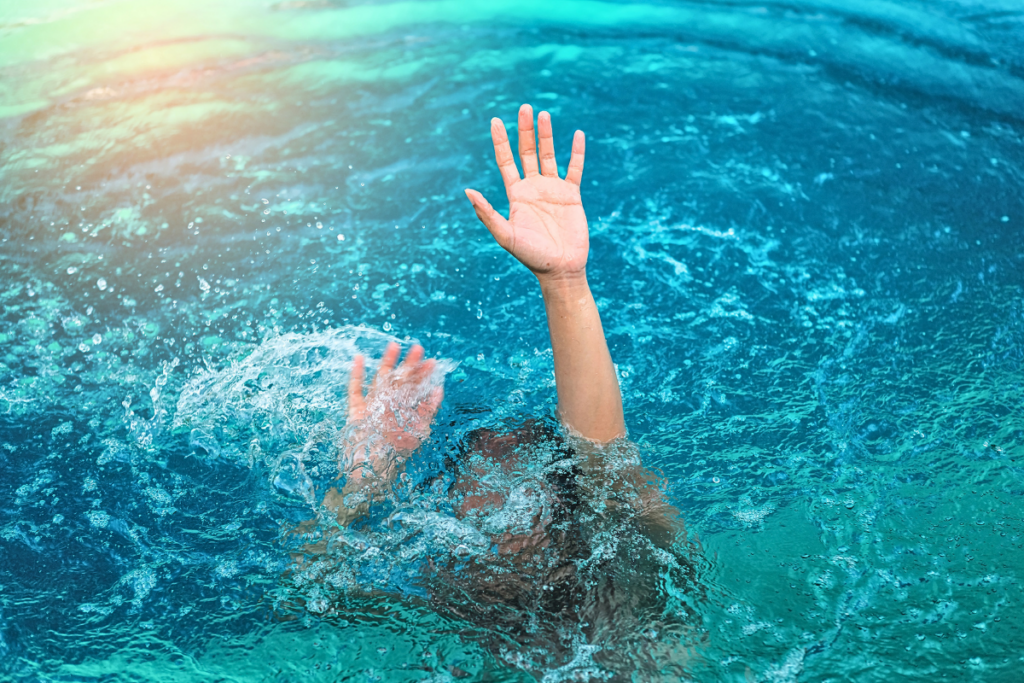
These experiences taught me an important lesson: drowning doesn’t usually look the way movies portray it. It’s often silent, fast, and easy to miss.
The Day My Daughter Couldn’t Reach the Surface
Several years ago, my family was invited to a friend’s house for a cookout. We were told to bring our swimsuits because we’d be spending time in their pool.
Swimming has always been a big part of our family. I’ve been swimming for as long as I can remember, and my husband and I taught our daughters to swim when they were babies. We love spending time together in the water.
When we arrived, I noticed the pool was filled with large flotation devices—floating lounge chairs, inner tubes, and oversized floats. It seemed excessive, but I didn’t say anything. Instead, I did what I’ve always done around water: I kept counting heads.
At one point, my youngest daughter, who was about nine years old, decided to swim the length of the pool underwater.
As she neared the opposite end, I noticed something wasn’t right.
She was trying to come up for air, but every place she surfaced was blocked by a floating raft or tube. She couldn’t find an opening.
My heart instantly raced.
I hurried across the pool, pushing and lifting the flotation devices out of her way until she finally broke the surface, gasping for air and visibly terrified.
No one else had noticed.
Not one person realized that a child who knew how to swim had nearly drowned because too many flotation devices covered the surface of the pool.
For the rest of the afternoon, several of those floats stayed out of the water.
The Silent Reality of Drowning
The second experience happened years later at the apartment complex where we lived.
The community pool became our summer gathering place. Friends would come over with their children, and we’d spend the hottest part of the day swimming together.
One afternoon, one of our friends brought her seven-year-old son.
The deepest part of the pool was only five feet and located in the middle. For reasons only he knew, he decided to walk straight across it instead of swimming.
He didn’t hold onto the wall.
He didn’t kick.
He didn’t paddle.
He simply kept trying to walk.
The adults—including me—were sitting poolside talking. But, as always, I continued doing silent head counts.
That’s when I realized one head was missing.
I looked toward the deep end and saw something I’ll never forget.
The little boy was completely underwater.
He wasn’t splashing.
He wasn’t screaming.
He wasn’t waving his arms.
He was silently struggling to push himself upward, desperately trying to reach the surface.
This is what real drowning often looks like.
I shouted for one of the teenagers walking nearby to grab him. Thankfully, he reacted immediately, reached into the water, and pulled the boy to safety.
His mother never saw it happening.
Drowning Doesn’t Always Look Like Drowning
I don’t share these stories to frighten anyone.
I share them because both situations were entirely preventable.
One child couldn’t reach the surface because too many flotation devices blocked her exit.
Another child entered water over his head without understanding how to swim.
Neither incident looked dramatic.
There were no cries for help.
No frantic splashing.
No one yelled, “He’s drowning!”
Just silence.
That’s why water safety requires more than flotation devices or assuming someone else is paying attention. Inflatable toys are not lifesaving equipment, and a crowded pool doesn’t guarantee someone will notice a child in trouble.
Every person—child and adult alike—should know the basic skills needed to stay safe in, on, and around the water.
Why Swimming Is a Life Skill
Maybe you don’t spend much time swimming.
Maybe you live far from lakes, rivers, or the ocean and assume the risk is low.
But water hazards exist in places we often overlook.
I’ve heard heartbreaking stories from friends and family about drownings that happened in bathtubs with only a few inches of water or in buckets left unattended while a curious toddler was nearby.
Then there are the situations none of us expect—a vehicle that slides into a pond after an accident, a flash flood that develops in minutes, or an emergency aboard a ferry or cruise ship.
Most people never imagine they’ll find themselves in circumstances like these.
Until they do.
This is why Coach Dana and her business of teaching water safety and swim skills is so important, and so needed in every community.
Don’t Be Afraid—Be Prepared
Fear isn’t the answer.
Preparation is.
Learning to swim is more than a recreational activity. It’s a life skill that builds confidence, increases safety, and can make the difference between life and death.
Teach your children to swim.
Learn if you never had the opportunity.
Practice water safety every time you’re near the water.
Because one day, those skills may save a life.
Maybe even your own.
*Coach Dana’s Note*: The Day Training Became a Mother’s Lifeline
There are moments in life that change you forever. This is one of them.
The story I’m about to share is deeply personal because it involves my own grandson.
It happened on what seemed like the perfect summer day—a gathering at a friend’s pool. I wasn’t there, but my daughter was, enjoying the afternoon with a close friend. Their children laughed, splashed, and played together while my daughter cradled her newborn baby in her arms. Like many parents, she was carrying on a conversation, soaking in the moment.
She also happened to be a former lifeguard.
She knew the risks that water presents. She understood that drowning can happen silently and in seconds. Yet even with that knowledge, all it took was one brief distraction.
When she looked back toward the pool, something felt wrong.
She couldn’t see her oldest son.
What she did see was the empty pool noodle he had been playing with.
Her heart dropped.
Looking beneath the surface, she spotted him lying motionless on the bottom of the pool.
In an instant, her training and her instincts took over.
She handed the baby to her friend, dove to the bottom, lifted my grandson from the water, carried him onto the pool deck, and immediately began CPR.
Seconds later, he took a breath.
Color returned to his face.
He sat up.
Paramedics arrived, checked him thoroughly, and thankfully confirmed he was okay.
Our family was incredibly fortunate.
As a former lifeguard myself, this story reinforces something I have always believed. We never allowed large flotation pads—or even kickboards—to be used freely in the pool because they can obstruct a swimmer from view. Lifeguards aren’t simply watching the surface of the water. They constantly scan every inch of the pool, including the bottom, looking for the slightest sign that someone is in trouble.
But even when a lifeguard is present, the first line of defense is always a vigilant parent or caregiver.
Water doesn’t give second chances. It doesn’t make exceptions for experience, confidence, or familiarity. It deprives the body of oxygen, and it does so quickly.
Most of us know someone who has experienced drowning or a close call. Some stories, like ours, end with relief and gratitude. Others end in heartbreak.
That’s why water safety isn’t optional—it’s essential.
At Swim with Coach Dana, water safety is the foundation of everything we teach. Before children learn strokes, they learn respect for the water. They learn rules that keep them safe, how to make smart choices around pools and open water, and how to stay afloat when it matters most.
Every lesson is about more than learning to swim.
It’s about building confidence.
It’s about preparing for the unexpected.
And most importantly, it’s about saving lives—one lesson at a time.